THE EXCLUSIVE CASE STUDY

KONARK

The Chariot of the Sun God

CHAPTER I

A Monument of Time

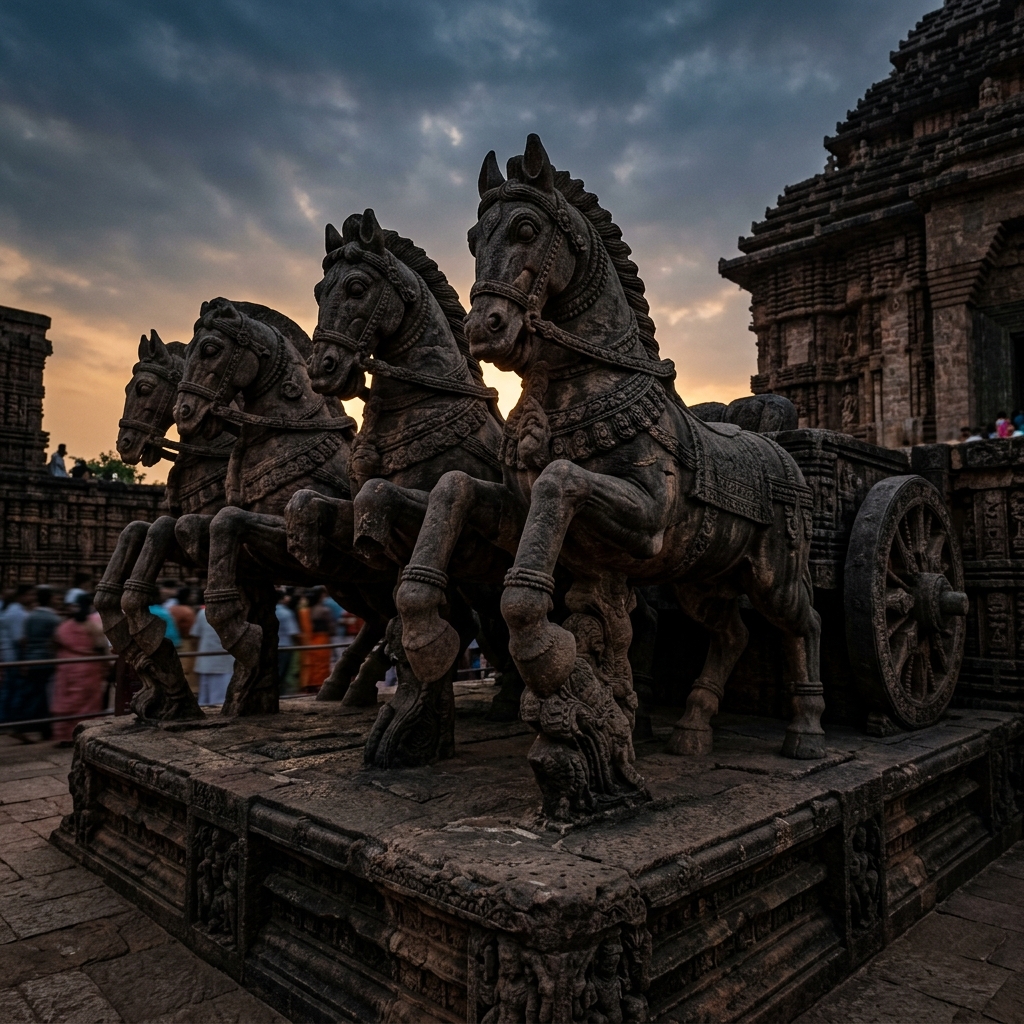
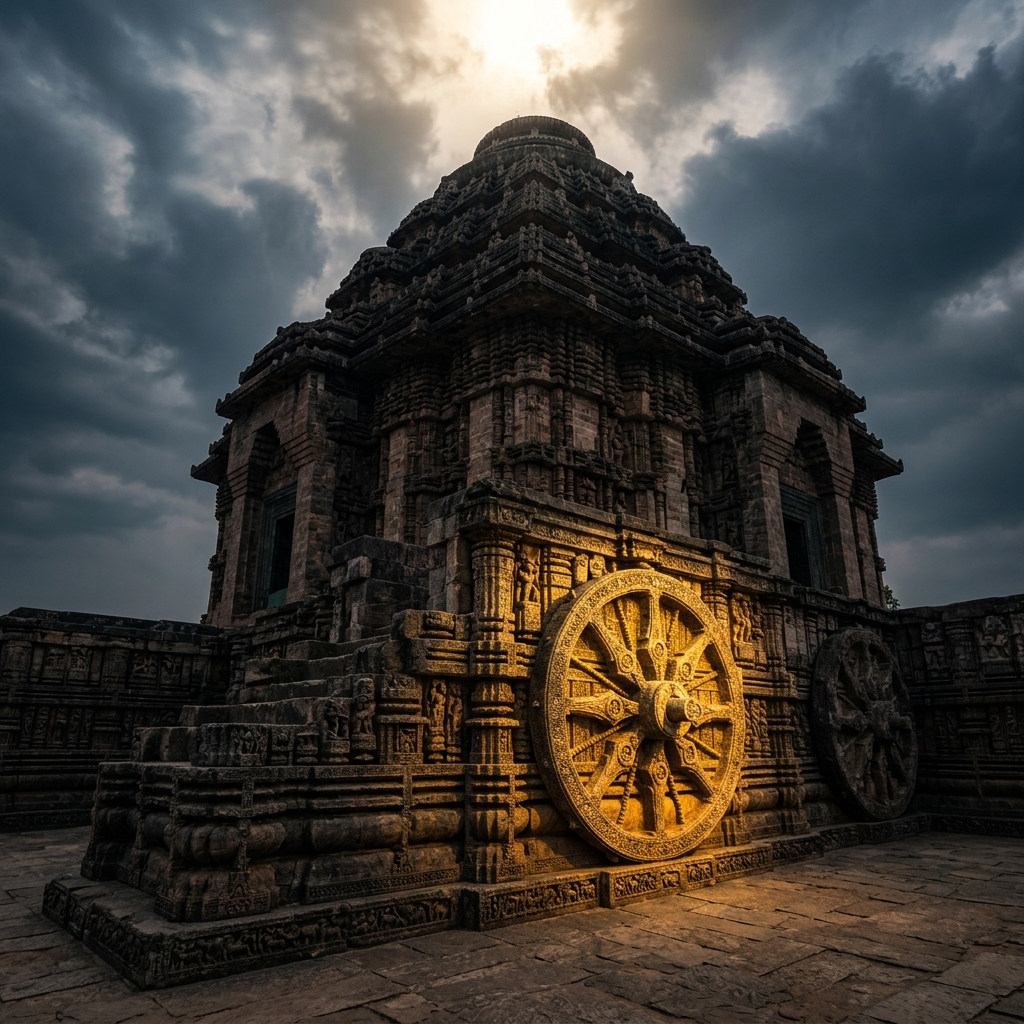
Built in the 13th Century by King Narasimhadeva I, the Sun Temple at Konark stands as a colossal stone chariot drawn by seven horses across the horizon. Its architectural precision is matched only by its symbolic depth, serving as a functional celestial observatory carved in sandstone. The temple was originally positioned so that the first rays of the rising sun would travel through the main entrance, cross the audience hall, and illuminate the jewel in the head of the Sun God's idol within the sanctum. This "Solar Zenith" alignment was calculated with such precision that it occurred only on the equinoxes.

The Legend of Samba

Ancient texts claim the temple's sanctity predates the 13th century. It is said that Samba, the son of Lord Krishna, was cured of leprosy after 12 years of penance dedicated to Surya at this very site. In gratitude, he installed the first image of the Sun God here, making Konark (Kona - Corner, Arka - Sun) the eternal "Corner of the Sun."

VISUAL ARCHIVES

The Stone Masterpieces
The Sacrifice

CHAPTER II

The 52-Tonne Pinnacle

At the core of the temple's mystery lies the 12-year-old Dharmapada. Legend speaks of a massive magnetic stone pinnacle (the Kalasha) that refused to be set by the 1,200 masters. It was the child's intuition that finally secured the crown. To protect his father's honor and the craftsmen's lives from the King's wrath, the boy threw himself from the pinnacle into the sea, becoming the eternal martyr of Odia heritage.
This pinnacle was rumored to be a massive Lodestone. The magnetic field was reportedly so powerful that it kept the main iron-cored deity levitating in mid-air within the sanctum. However, the force was so immense that it pulled passing ships toward the shore, leading to its eventual removal by sailors—an act many believe triggered the temple's structural decline.
CHAPTER III

The Iron Skeleton

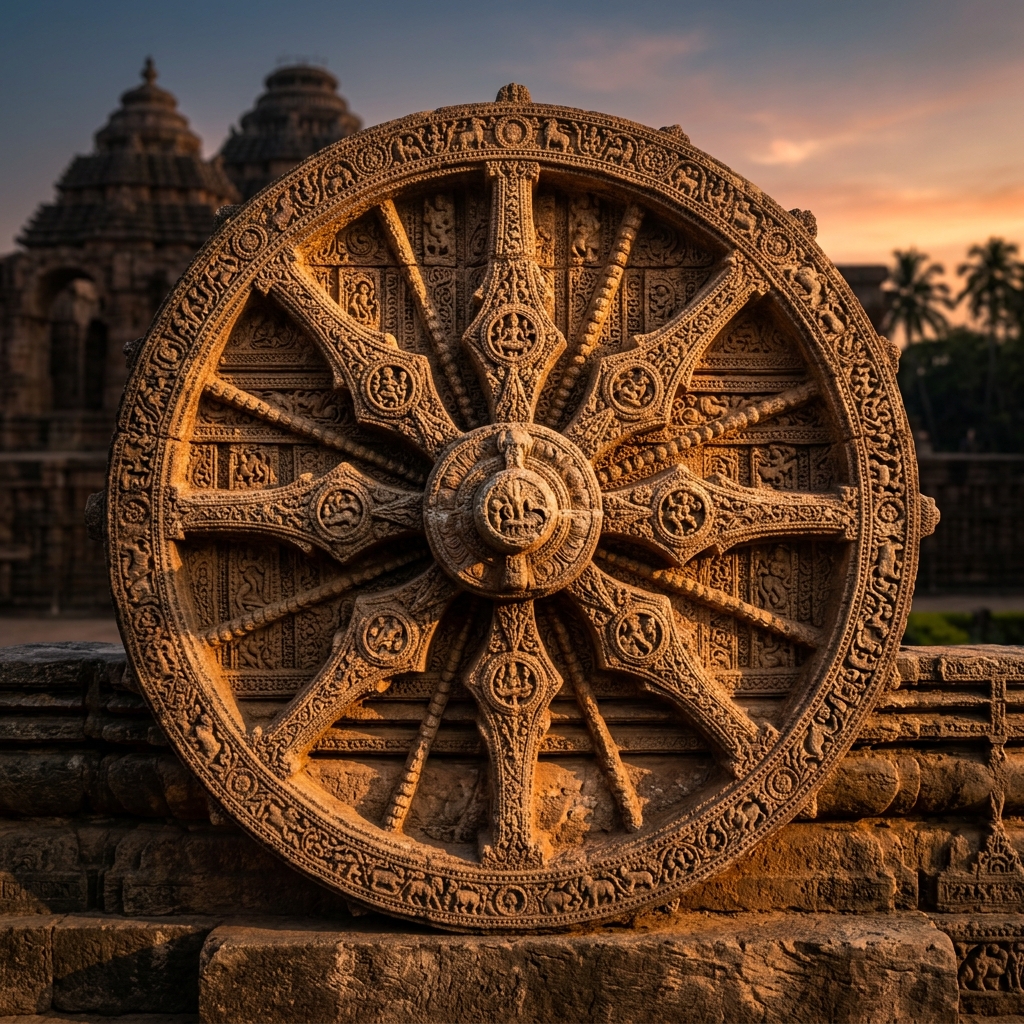
The structural integrity of Konark's massive 227-foot tower relied heavily on iron beams and interlocking cramps. These heavy iron structures acted as the "structural skeleton" of the temple, holding the colossal sandstone blocks together without mortar and showing remarkable corrosion resistance. The precision of the 24 wheels is equally stunning; each wheel is a functional sundial, accurate within a single minute. The wheels also represent the 24 fortnights (Pakshas) of the Hindu calendar, bridging the gap between time and divinity.
CHAPTER IV

The Black Pagoda

European sailors used to call Konark the "Black Pagoda" as a contrast to the "White Pagoda" (Jagannath Temple at Puri). Its dark sandstone silhouette against the horizon served as a crucial navigation landmark for centuries. Legend also whispers of the Lotus of Vishnu; it is said that after defeating the demon Gyasur, Lord Vishnu left his symbols across Odisha—his conch in Puri, his disc in Bhubaneswar, and his sacred mace in Jajapur, leaving his sacred lotus here in Konark.

Whispers of the Devadasis

Local lore suggests that on quiet nights, the faint sound of ghungroos (ankle bells) can still be heard echoing through the Natyamandapa (Dancing Hall), where the temple dancers once performed to please the Sun God before the temple fell into silence.

Engineering Fast Facts

Total Stone: Over 12 million cubic feet of Chlorite, Laterite, and Khondalite.

Labor: 1,200 master craftsmen worked for 12 years (1243-1255 CE).

Tower Height: Originally 70m (227ft), now only the Jagamohana (38m) stands.

The Wheels: 24 wheels representing the Pakshas (fortnights) of the year.

CHAPTER V

The Eternal Dance

The Natyamandapa (Dancing Hall) is a masterpiece of relief sculpture. Every inch of its pillars is covered with carvings of musicians and dancers in various Mudras and Karanas. Today, the temple remains a globally recognized UNESCO World Heritage site and continues to inspire millions through the annual Konark Dance Festival, where the ancient rhythms of Odissi dance come alive against the backdrop of the stone sun chariot.